Introduction: The City of Kings
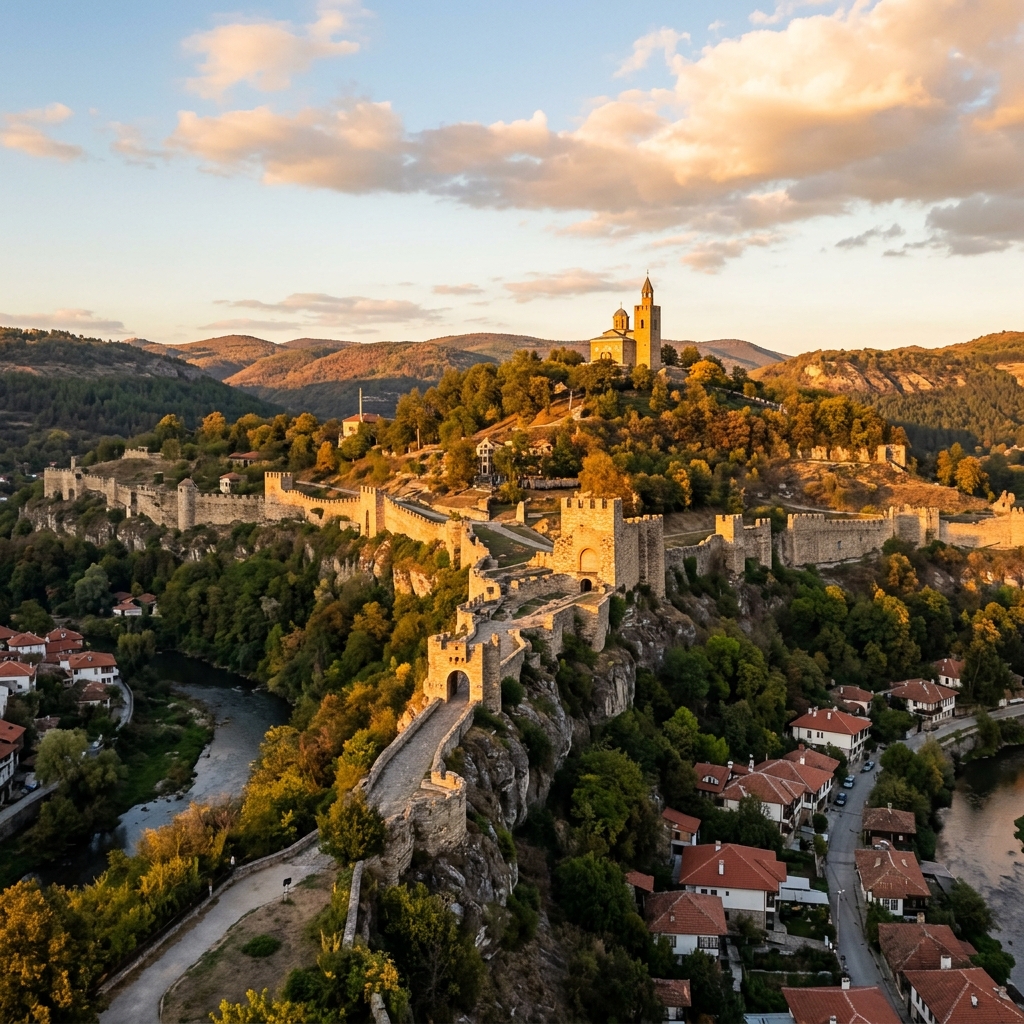
For UK travellers seeking a rich cultural and historical holiday in Europe, Bulgaria is rarely the first destination that comes to mind. However, this ancient Balkan nation boasts a heritage that rivals that of Greece and Italy. At the heart of this history lies Veliko Tarnovo, the magnificent capital of the Second Bulgarian Empire (1185–1396). Built on three steep hills divided by the winding loops of the Yantra River, Veliko Tarnovo is one of the most dramatically situated cities in Europe. Its old town features rows of traditional 19th-century houses that appear to hang precariously over the river gorge, all looked over by the massive ruins of the Tsarevets fortress. Just a short drive away lies Arbanasi, a historic stone village that served as a retreat for the medieval nobility. This comprehensive guide covers the sights, culinary traditions, and travel details of this medieval Bulgarian treasure.
Tsarevets Fortress: The Medieval Citadel
The undisputed crown jewel of Veliko Tarnovo is Tsarevets, a massive fortress covering an entire hill. Surrounded by thick defensive walls and steep cliffs, Tsarevets was the primary seat of the Bulgarian tsars and patriarchs during the Middle Ages. It was a bustling city in its own right, housing the royal palace, the patriarchal complex, and dozens of churches and residential quarters.
Entering the fortress across the narrow stone bridge leads you past three defensive gates. Key highlights include the restored **Patriarchal Cathedral of the Holy Ascension** on the summit, decorated with modern, dramatic murals by artist Teofan Sokerov, and **Baldwin’s Tower**, where Baldwin I of Flanders, Latin Emperor of Constantinople, was imprisoned and died after his capture at the Battle of Adrianople in 1205.
If you visit during the summer, you might catch the **”Sound and Light” show**. In the evening, the entire fortress is illuminated by hundreds of multi-coloured lights and lasers, accompanied by dramatic music and church bells, telling the story of the rise and fall of the Bulgarian Empire.
The Amphitheatrical Old Town and Samovodska Charshia
Veliko Tarnovo’s old town is a masterpiece of National Revival architecture. Walk along **Gurko Street** to see how the traditional whitewashed stone and wood houses climb the cliffs, offering spectacular viewpoints over the Yantra River gorge and the Assenevtsi Monument.
The heart of the old town’s artisan life is the Samovodska Charshia (the Old Bazaar). In the 19th century, peasants from nearby villages gathered here to sell their fresh produce. Today, the cobbled street is lined with restored workshops where traditional craftsmen—including silversmiths, potters, woodcarvers, weavers, and icon painters—still practice their crafts using historical tools and methods. It is the perfect place to purchase authentic Bulgarian souvenirs, or to stop at a local sweet shop to try *Kadaif* or a cup of traditional sand-brewed coffee served with white jam.
Arbanasi: The Stone Sanctuary of the Nobility
Perched on a high plateau just four kilometres from Veliko Tarnovo is the historic village of Arbanasi. Established in the 15th century by wealthy merchants and nobles, the village is unique for its fortress-like stone houses (kashti).
Unlike the light, open houses of Sozopol or Berat, Arbanasi’s houses are built with massive, high stone walls, heavy oak gates, and iron-barred windows, designed to protect the wealthy merchants from bandits. The **Konstantsaliev House** is one of the oldest and largest preserved houses in the village, offering an insightful look at the affluent lifestyle of the 17th century, complete with secret hiding chambers and advanced heating systems.
Arbanasi is also famous for its historic churches. The **Church of the Nativity** is a simple stone building from the outside, but its interior is entirely covered in brilliant 16th and 17th-century frescoes. The most famous mural is the “Wheel of Life,” depicting the stages of human life and the passing of time, a rare and beautifully preserved theological work.
Gastronomy of Central Bulgaria: Rich Clay-Pot Stews
The culinary traditions of Veliko Tarnovo are deeply rustic, focusing on rich stews slow-cooked in traditional clay pots. The region is also famous for its boutique vineyards, producing excellent Cabernet Sauvignon, Merlot, and the local red grape variety *Gamza* in nearby Lyaskovets.
Classic dishes to try include:
- Kavarma: A rich pork or chicken stew cooked in a clay pot with mushrooms, onions, wine, and local savory herbs, topped with an egg.
- Sach: A combination of sliced meats and seasonal vegetables cooked and served sizzling on a hot clay platter.
- Banitsa: The national dish of Bulgaria—flaky filo pastry layers filled with whisked eggs and crumbled white brined cheese (sirene), baked until golden.
- Shopska Salad: A refreshing salad of chopped tomatoes, cucumbers, onions, and baked peppers, piled high with grated white sirene cheese.
Travel Logistics for UK Travellers
Planning your trip to Veliko Tarnovo is simple, with multiple transport options:
- Flights: Sofia Airport (SOF) is the primary gateway, offering daily direct flights from London, Manchester, and other UK cities. Alternatively, you can fly into Henri Coandă International Airport (OTP) in Bucharest, Romania, which is actually closer (a 2.5-hour drive south) than Sofia (a 3-hour drive east).
- Car Rental: Renting a car is the best option to explore Arbanasi, the nearby Dryanovo Monastery, and the stunning Hotnitsa waterfalls. The main roads connecting Sofia, Bucharest, and Veliko Tarnovo are well-maintained.
- When to Visit: May to October is the ideal season, with warm, sunny weather and numerous outdoor cultural festivals.
Why Expats are Choosing Veliko Tarnovo
For UK expats and retirees seeking a peaceful lifestyle at a very low cost of living, Veliko Tarnovo is one of the top choices in Eastern Europe. The region offers incredibly cheap property prices, clean mountain air, and a large, welcoming international expat community. The city is a vibrant university hub, ensuring a lively cultural scene, excellent medical facilities, and high-speed internet, making it an ideal sanctuary for slow, comfortable living.