Introduction: The Algarve You Didn’t Know Existed
For most British holidaymakers, the Algarve is synonymous with the bustling resorts of Albufeira, Vilamoura, and Lagos. These destinations offer superb golf courses, lively nightlife, and sweeping golden beaches, but they also come with heavy crowds, high-rise development, and a distinctly commercial feel. However, if you head east from Faro Airport towards the Spanish border, the landscape changes dramatically. The cliffs and coves of the western Algarve give way to the calm lagoons, salt pans, and barrier islands of the Ria Formosa Natural Park. At the heart of this region is Tavira, a historic gem that offers a peaceful, authentic Portuguese experience. This guide explores why Tavira and the Eastern Algarve represent the ultimate quiet coastal escape for UK travellers seeking sun, history, and tranquil natural beauty.
Tavira: A Historic Haven on the Gilão River
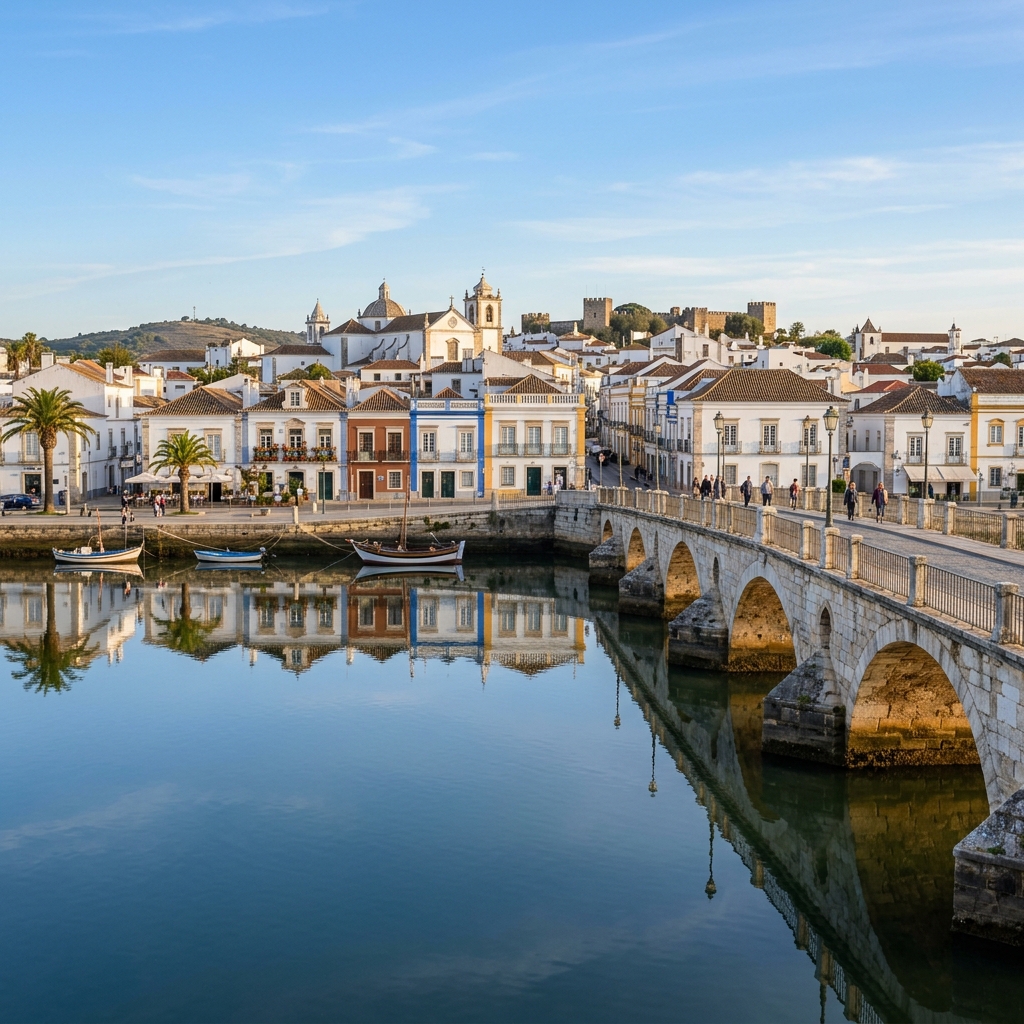
Tavira is widely regarded as the most charming town in the Algarve, and it is easy to see why. Spanning the slow-flowing Gilão River, the town is a picturesque maze of cobblestone streets, whitewashed houses with traditional pyramid-shaped roofs (telhados de tesoura), and elegant facades adorned with colorful tiles (azulejos).
The town’s history is rich and visible at every turn. Connecting the two halves of the town is the Ponte Antiga (Old Bridge), commonly referred to as the Roman Bridge, though its current appearance dates from a 17th-century reconstruction. A short walk uphill leads to the ruins of the medieval Castle of Tavira, where you can climb the battlements for panoramic views over the town’s rooftops and the shimmering salt flats beyond. Surrounding the castle are more than thirty churches, including the Renaissance-style Igreja da Misericórdia, featuring stunning 18th-century blue and white tile panels depicting the works of mercy.
What makes Tavira truly special is its commitment to preservation. The town is a member of the global Cittaslow (Slow City) movement, which advocates for the protection of local traditions, gastronomy, and a slower, more deliberate pace of life. Here, you won’t find loud nightclubs or neon-lit bars; instead, evenings are spent dining on quiet riverfront terraces or listening to traditional Fado music in historic squares.
The Barrier Islands: Pristine Sands of the Ria Formosa
One of the unique features of the Eastern Algarve is that its beaches are not directly attached to the mainland. Instead, they are located on a series of sandy barrier islands (ilhas) that shield the Ria Formosa lagoon from the open Atlantic Ocean. This means that reaching the beach is always a mini-adventure, involving a short, scenic ferry ride or a water taxi across the salt marshes.
- Ilha de Tavira: The most popular beach in the area, accessible by a regular ferry from the town centre (during the summer) or from the nearby jetty at Quatro Águas. The island offers kilometres of fine white sand, calm turquoise waters, and a selection of cafes and restaurants. Despite its popularity, a short 10-minute walk away from the main entrance reveals vast stretches of completely empty sand.
- Ilha de Cabanas: Located opposite the village of Cabanas de Tavira, this narrow strip of sand is reached via a quick boat crossing in traditional wooden water taxis. It is a peaceful, low-key spot with a single wooden boardwalk and minimal facilities, perfect for those seeking solitude.
- Terra Estreita: Accessible by ferry from the small fishing village of Santa Luzia, this beach is located on the narrowest part of the island chain. It offers a pristine, undeveloped setting with sun loungers to rent during the summer and a small eco-bar.
Exploring the Eastern Algarve’s Quiet Coastal Villages
Tavira makes an excellent base, but the surrounding coastline is dotted with other charming settlements that are well worth exploring:
- Santa Luzia: Known as the “capital of octopus” (Capital do Polvo), this traditional fishing village is located just three kilometres west of Tavira. Its colorful harbour is lined with specialized restaurants serving octopus prepared in dozens of ways. It is also the gateway to the scenic Praia do Barril, which you can reach by walking across a footbridge over the lagoon and taking a charming miniature train through the pine trees and salt marshes. The beach is home to the famous “Anchor Cemetery” (Cemitério das Âncoras), a striking monument of hundreds of rusting anchors left on the dunes by the former tuna fishing community.
- Cabanas de Tavira: A former tuna fishing village that has developed into a relaxed holiday resort. The long waterfront promenade is lined with cafes, bars, and restaurants overlooking the lagoon of the Ria Formosa, making it a wonderful spot for a sunset stroll.
- Cacela Velha: Perched on a sandstone cliff overlooking the easternmost inlet of the Ria Formosa, this tiny, historic hamlet consists of just a handful of whitewashed cottages, a small church, and a fortress. The view from the fortress walls across the lagoons and sandbars at low tide is widely considered one of the most beautiful in Portugal.
Culinary Traditions: Fresh Fish and Octopus Delicacies
The gastronomy of the Eastern Algarve is deeply rooted in the ocean and the lagoon. Traditional dishes are simple, fresh, and bursting with Mediterranean flavor.
In Santa Luzia and Tavira, the star ingredient is octopus (polvo). Traditional preparations include Polvo à Lagareiro (octopus baked with olive oil, garlic, and small potatoes), Arroz de Polvo (a rich, wet octopus rice stew), and even octopus carpaccio. Another local specialty is Cataplana, a fragrant seafood stew cooked in a traditional clam-shaped copper pot that locks in the juices of clams, prawns, fish, and chorizo. Pair your meal with a crisp, dry white wine from the local Tavira DOC region or a refreshing local craft beer.
Travel Logistics for UK Travellers
Getting to the Eastern Algarve is simple and convenient:
- Flights: Faro Airport (FAO) is the main entry point, located just a 30-minute drive from Tavira via the A22 motorway. Direct flights are available year-round from almost all major UK airports, including London, Manchester, Bristol, and Edinburgh, operated by British Airways, EasyJet, Ryanair, and Jet2.
- Transport: While car hire is highly recommended to explore the inland hills and remote villages, Tavira is one of the few places in the Algarve that can be easily enjoyed without a car. The regional railway line (Linha do Algarve) connects Tavira directly to Faro, Olhão, and Vila Real de Santo António on the Spanish border.
- When to Visit: The shoulder seasons of spring (April to June) and autumn (September to October) offer warm, sunny weather ideal for walking and cycling, without the higher prices and busier crowds of July and August.
The Appeal for Expats and Slow Living
For UK expats looking for a peaceful sanctuary to retire or work remotely, the Eastern Algarve offers a highly attractive alternative to the more commercialized western coast. Property prices are generally lower, and the cost of living remains very reasonable. The presence of the Ria Formosa ensures that the region remains green and protected from aggressive high-density development, preserving the slow, natural lifestyle that makes this quiet coast so special.