Introduction: The Alternative Bulgarian Riviera
For most British holidaymakers, the Bulgarian Black Sea coast is synonymous with Sunny Beach—a high-density resort known for its long sandy beach, lively nightlife, and package tour hotels. While Sunny Beach is excellent for a high-energy holiday, it represents only a fraction of what Bulgaria’s coastline has to offer. If you head south of the port city of Burgas, the concrete resorts disappear, replaced by rocky peninsulas, ancient fishing towns, and the dense, mystical forests of the Strandja mountain range. At the heart of this region is Sozopol, one of the oldest towns on the Black Sea, and the adjacent Strandja Nature Park. For UK travellers seeking an escape that combines rich Greek and Thracian history with wild, pristine beaches, the southern Bulgarian coast is a revelation. This guide explores the very best of Sozopol and the Strandja coast.
Sozopol: The Ancient City of Salvation
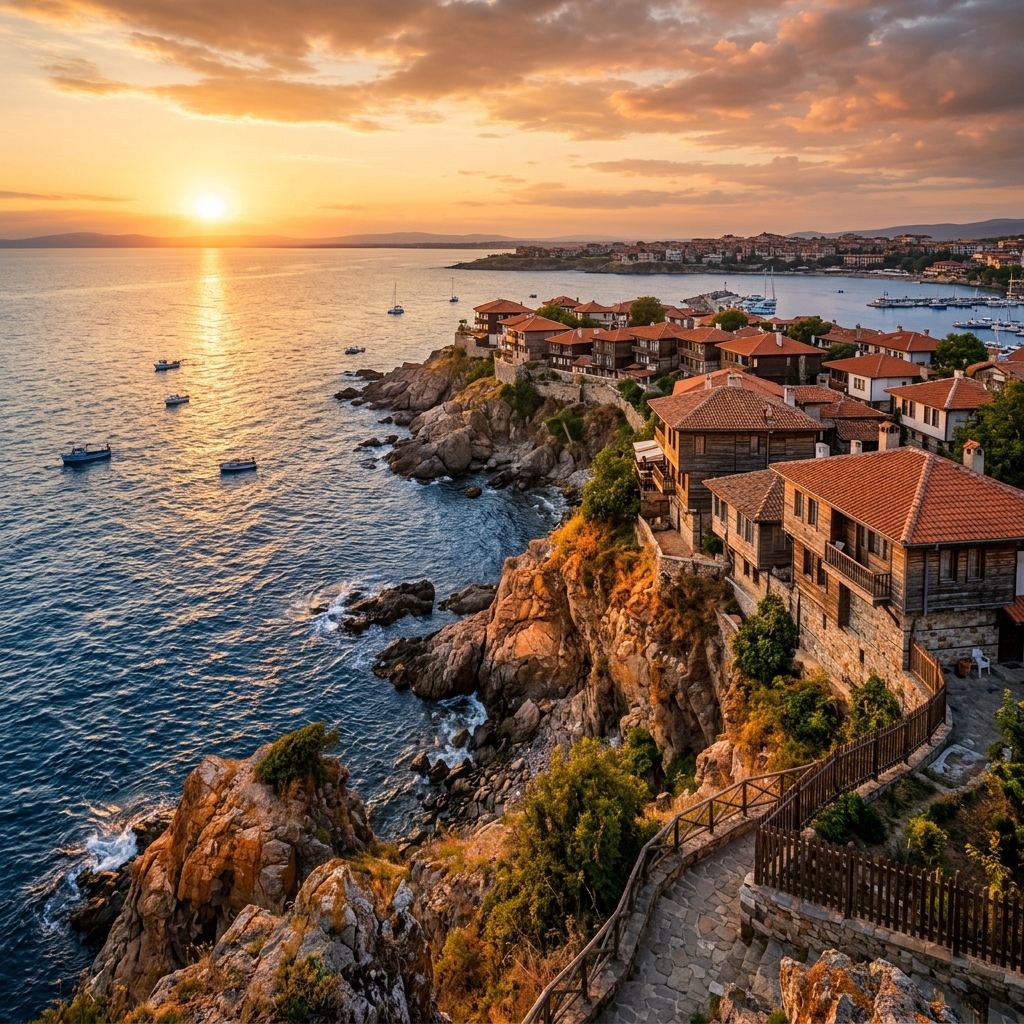
Sozopol is situated on a rocky peninsula 35 kilometres south of Burgas. Founded in the 7th century BC by Greek colonists from Miletus, the town was originally named Apollonia Pontica in honour of the god Apollo. It grew into a wealthy trading hub, famed for its massive bronze statue of Apollo that was later carried off to Rome as war booty. In the 4th century AD, with the adoption of Christianity, the town was renamed Sozopolis—the City of Salvation.
Today, Sozopol is split into an old and a new town. The Old Town is a designated architectural reserve, consisting of narrow cobblestone streets lined with unique 18th and 19th-century houses. Built with a stone ground floor for storage and a cantilevered wooden upper floor to protect against the damp sea air, these houses give the town its distinctive, rustic character. Key historical sites include the medieval Southern Fortress Wall and Tower, which has been restored to offer spectacular walk routes along the cliffs, and the Church of Saints Cyril and Methodius, which houses relics believed to belong to John the Baptist, discovered during archaeological excavations on the nearby St. Ivan Island.
The Wild Coast of Strandja Nature Park
Just south of Sozopol, the coastline meets the hills of the **Strandja Mountain**, the largest protected natural area in Bulgaria. The park is a unique ecological zone where Mediterranean and Pontic climates merge, producing dense oak and beech forests that run directly down to the sea.
Unlike the northern coast, the beaches here remain wild and undeveloped:
- Veleka Beach (Sinemorets): Located where the Veleka River cuts through the hills to meet the Black Sea. The beach is a narrow sandbar, with the freshwater river on one side and the deep blue sea on the other, creating one of the most iconic natural sights in the Balkans.
- Silistar Beach: The southernmost sandy beach in Bulgaria, situated just a few kilometres from the Turkish border. Enclosed by rocky headlands and pine forests, Silistar offers calm, shallow waters and is a nesting site for rare birds.
- Arkutino: Located near Sozopol, this beach is famous for its massive sand dunes and the nearby water lily sanctuary on the Ropotamo River.
Mystical Strandja: Fire-Dancing and Ancient Lore
The interior of Strandja is a land of myth and ancient traditions. It was the heartland of the ancient Thracians, who left behind numerous megalithic sanctuaries. The most famous is Beglik Tash, a massive rock sanctuary located in the forest near Primorsko. The Thracians arranged these massive stone blocks to serve as an astronomical calendar and a site for sacred rituals.
Strandja is also the birthplace of Nestinarstvo—an ancient ritual where dancers perform barefoot on glowing red-hot embers. Held annually in the village of Bulgari on the night of Saint Constantine and Saint Helena (June 3), this ritual is a unique blend of Orthodox Christian belief and pagan sun worship, recognized by UNESCO as an intangible cultural heritage.
Sea and Forest Gastronomy: Black Sea Flavours
The culinary traditions of the southern Bulgarian coast combine fresh seafood with hearty mountain ingredients:
- Black Sea Fish: Tavernas in Sozopol serve local fish like *Laskara* (red mullet), *Saffron* (bluefish), and *Kalkan* (turbot), alongside fried *Tsatsa* (sprat) served with cold Bulgarian beer.
- Mussels: Sourced from the local mussel farms off the coast, usually cooked with rice, onions, and fresh dill.
- Strandja Honeydew Honey (Mana): A highly prized, dark honey produced by bees from the oak forests of Strandja. It is rich in minerals and has a unique, complex flavor.
- Shkembe Chorba: A traditional garlic and chili tripe soup, popular as a hangover cure.
Travel Logistics for UK Visitors
Getting to the southern Black Sea coast is easy and convenient:
- Flights: Burgas Airport (BOJ) is the primary gateway, located just a 40-minute drive from Sozopol. During the spring and summer, low-cost carriers like Wizz Air, Ryanair, and Jet2 operate direct flights from London, Manchester, Birmingham, and East Midlands.
- Car Hire: Renting a car at Burgas Airport is highly recommended if you plan to explore the Strandja villages and the beaches of Sinemorets and Silistar.
- When to Visit: June to September offer excellent beach weather, but the shoulder month of September is particularly beautiful, as the sea remains warm and the summer crowds have departed.
Expats and Remote Workers on the Southern Coast
For UK expats and digital nomads, the region around Sozopol and the nearby city of Burgas offers a highly attractive package. Bulgaria has a flat 10% income tax rate, and the cost of living remains among the lowest in the European Union. The combination of coastal living, clean forest air, and high-speed internet makes it an ideal spot for those seeking a high-quality, budget-friendly lifestyle.