For years, the classic British garden existed in a tidy binary: front, for show and street presence, and back, an off-stage area for veggies and fruit. But behind the scenes, something is fermenting, breaking down these traditional boundaries and producing a new, hybrid approach to garden design.
This new style, also known as “edible landscaping” or “foodscaping,” promotes the seamless incorporation of food plants and decorative plants, crafting landscapes not only beautiful but highly productive.
It’s a concept that is rapidly gaining popularity across the UK, with gardeners seeking to maximize their garden
areas, feel more linked to their food source, and live more sustainably. Gone are the days of being confined to
secret allotments or dedicated vegetable plots, the future of home-grown food is fast becoming a stunning aspect
in itself.
What is Edible Landscaping?
In essence, edible landscaping is a design approach to garden design where plants that possess an edible
component – fruit, berries, leaves, roots, or flowers – are incorporated into the landscape’s aesthetic. It’s not
compromising functionality for beauty; it’s choosing plants that are beautiful to start with and are edible too, or
imposing design principles on turning them edible.
Think beyond cabbage rows. Imagine a living border where deep purple depths of an ‘Arctic Beauty’ kiwi vine spill
down an arbor, or where shiny leaves and showy berries of a blueberry bush provide season-long interest with
topiary bushes. Imagine walks bounded by scented thyme, practical nasturtiums tumbling out of hanging baskets,
or the architectural interest of an artichoke plant anchoring a sunny bed.
This approach challenges the old presupposition that edible flowers are less showy than their purely ornamental
relatives. There are many of these edible plants that possess sheer beauty:
• Beautiful Flowers: Apple blossom to borage or calendula petals.
• Pretty Foliage: The silvered leaves of sage, the green leaves of kale, the striped leaves of certain mints.
• Novel Forms & Texture: The shaped bulk of rhubarb, the climbing elegance of beans, the feathered fronds of
asparagus.
• Seasonal Colour: The reddening of currants, the blues of blueberries, the autumn gold of raspberries.
Why the food landscaping surge in the UK?
There are a number of good reasons that food landscaping is becoming the new star of British gardens:
1. Food connection: Individuals increasingly demand to learn about where their food comes from, reduce food
miles, and enjoy the delight of eating homegrown fruits and vegetables fresh from the garden. Edible landscaping
goes one step further than this connection to the physical and tangible aspect of everyday life.
2. Space optimization: Small gardens are becoming the trendy choice among city and suburban gardeners, and
every centimeter needs to be utilized. Foodscaping allows gardeners to produce food and aesthetics
simultaneously, making single-purpose, sole vegetable beds redundant.
3. Sustainability & Resilience: Having your own edaple landscaped food garden helps to cut reliance on
supermarket supply systems, reduce packaging waste, and encourage more sustainable approaches to
horticulture. It encourages self-reliance and resilience.
4.Cost Savings: Although there is a one-time investment, a mature edible landscape can yield a consistent harvest
of fresh, organic fruit and vegetables, keeping food costs acutely low in the long term.
5.Increased Biodiversity: Edible crops such as fruit trees, berry bushes, and herbs are rich in nectar and pollen, and
are therefore excellent resources for pollinators, adding local biodiversity – a major priority for UK gardeners in
general.
6.Beauty: Rather than being utilitarian, edible landscapes have the potential to be stunning. The ever-changing
feature of flowering and fruiting plants gives the garden a dynamic allure.
Positioning Edibles in Your Ornamental Fabric: UK Down-to-Earth Examples
The beauty of edible landscaping is its versatility. Below are a few practical examples of how UK gardeners are
adopting edibles into their newly created or re-conceptualized gardens:
1. Re-done Borders and Beds
• Fruiting Shrubs as Ornamental Plants: Instead of plain ornamental shrubs like Choisya or Lavender (though these
may well still be included!), blueberry bushes (stunning autumn colours, spring flowers, and harvestable berries),
currant bushes (red, white, and black all yield different colours and flavours), or gooseberries. They offer shape,
seasonal interest, and a crop.
• Herbs as Edging and Groundcover: Possibly edible herbs like thyme (creeping, lemon, common) are excellent,
low-maintenance edging for borders or paths. Oregano and marjoram are fair groundcover. Purple sage,
variegated sage, and common sage provide attractive foliage and palatable leaves.
• Leafy Greens for Texture: Frilly-leaved kale types (like ‘Cavolo Nero’) and Swiss chard (‘Bright Lights’ being a
wonderful example with its colored stems) add a gorgeous decorative element, texture, and burst of color to a
bed. Plant them in drifts, not in rows, for a natural effect.
2. Vertical Veggies and Climbing Crops
• Fruit and Vines instead of Pergolas and Arbours: Replace non-edible climbers with productive ones. Grape vines
(choose those tolerant to the UK climate like ‘Phoenix’ or ‘Regent’) can be trained to envelop pergolas. Kiwi vines
(hardy varieties like ‘Issai’ or ‘Arctic Beauty’) provide dense cover and textured fruits.
•Climbing Peas and Beans: Though normally annuals, their rapid growing, flowering, and heavy cropping nature
makes them well suited to screening unsightly fences or providing a summer screen of privacy. Train over obelisks
in ornamental beds.
•Espaliered Fruit Trees: Espalier apple, pear, or plum trees to grow flat against a fence or wall. The method is
highly space-saving, handsome, and encourages heavy fruiting. It’s an old-fashioned approach well suited for many
UK gardens.
3. Patio Containers & Pots:
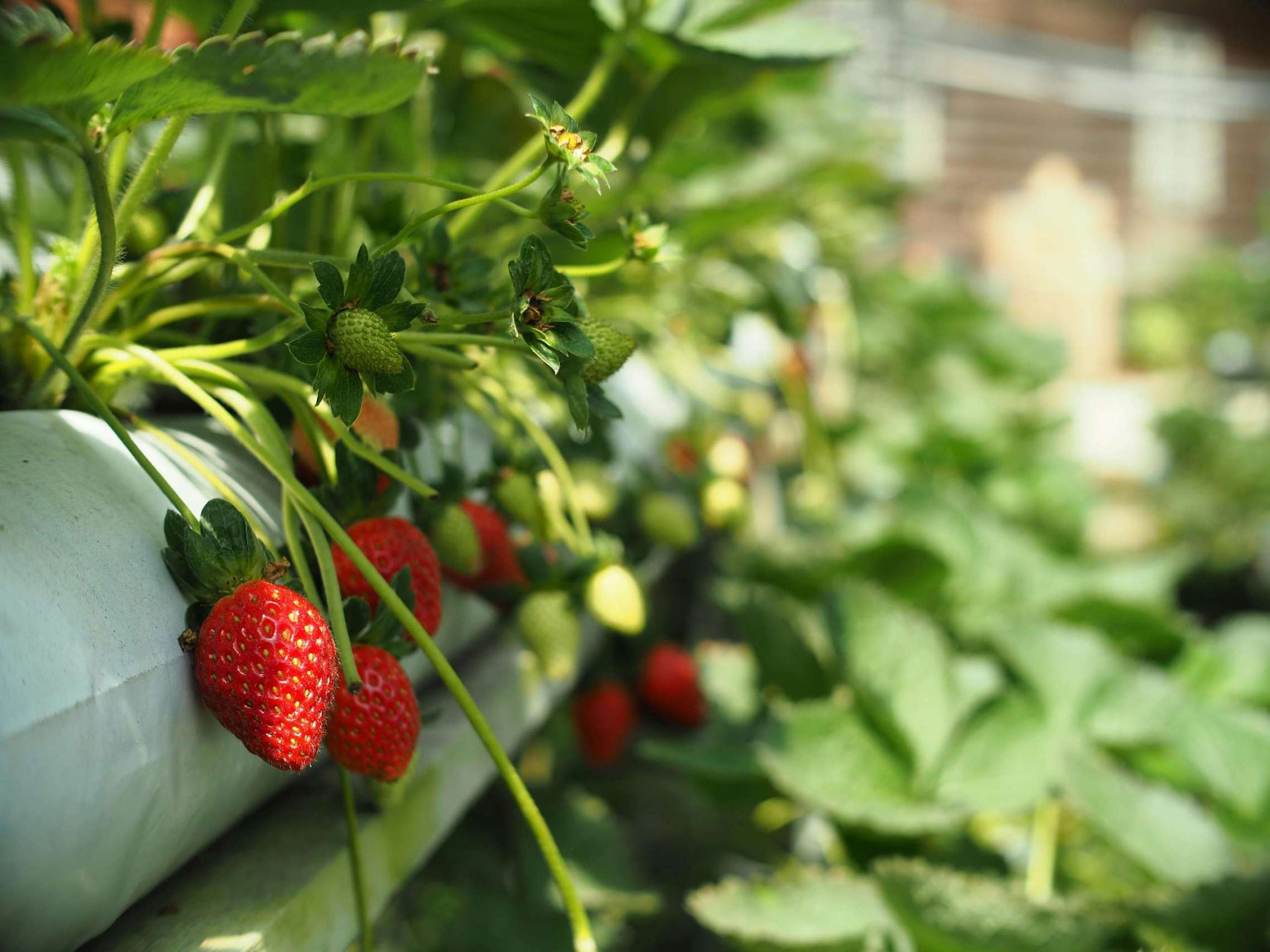
• Strawberry Towers & Hanging Baskets: Strawberries are very flexible and are excellent potting up into hanging
baskets or strawberry planters made to hang.
• Edible Flowers & Herbs: Fill decorative containers with bright-coloured nasturtiums (flower and leaf edible) and
pot up with trailing rosemary or lavender.
• Dwarf Fruit Trees: Contemporary nurseries currently carry dwarf types of apple, pear, cherry, or fig trees that
thrive in extremely large pots, making fruiting a reality for balconies and patios.
4. Perennial Powerhouses:
• Rhubarb: Its architectural leaves, so huge, make a dramatic splash to a border, particularly in spring.
• Artichokes: Globe artichokes are thistle-like flowers on stately plants that attract pollinators and bear a gourmet
crop.
•Asparagus: Taking up space, a well-established asparagus bed returns feathery foliage after spear harvest,
having a fresh, light texture which adds to the garden’s beauty.
Designing Your UK Edible Landscape: Key Considerations
• Sunlight: Any edible plant will require at least 6 hours of direct sunlight daily. Plan around the sunniest spots in
your garden.
• Soil: Best is good, free-draining soil. Heap in masses of organic matter (compost, well-rotted dung) to add fertility
and texture.
• Watering: Take watering needs into account. Keep similar watering requirements together.
• Plant Selection: Select plants that are well adapted to the UK climate and your local microclimate. Look for
resistance to disease and ultimate size.
• Succession Planting & Harvesting: Consider the evolving look of plants throughout the seasons. Provide year-
round picking and replace exhausted annuals with new, edible, ornamental flowers or shrubs.
• Accessibility: Provide paths and openings for easy picking and upkeep.
Edible landscaping is not a trend; it’s an intentional expansion of how we interact with our gardens. It invites us to
consider our outdoor areas not merely as recreation or appearance spaces, but as living, working pantries. It
presents the UK gardener with the chance to produce something beautiful while they harvest in abundance as
well, both pleasing the patch and pleasing the plate, plant by stunning, drool-inducing plant. It’s an invitation to
cultivate a garden which nourishes the soul, and the belly, as well.