My kitchen is a whirlwind of what can only be described as neat chaos every autumn—high
stacks of apples, plot carrots, and children running around for blackberries. It’s when the
garden goes quiet with one final big bash before winter arrives and we’re left standing there
blinking trying to figure out how in the world we’re going to make it all last.
That’s where canning and fermentation step in—those old-fashioned processes our
grandmothers used to have to undertake, and ones we’ve come to love ever since. It’s
easy, pleasant and nice once you get the hang of it, and so thoroughly rewarding on top of
that. And in a world where food is just growing, growing, growing and vanishing, it doesn’t
make sense not to get every last bite possible out of what you already have.
Why Save Food Now
British fall harvest season. Even if you’re not growing for yourself, the markets are
brimming with apples, beets, squash, and cabbage—affordable and delicious as it will be
for the rest of the year. The identical vegetables in January are more expensive and less
delicious.
Canning and preserving allow you to lock in the freshness and pocket the pennies during
winter. You’re not a farm-to-table foodie or farmhouse chef in waiting—you just need time,
jars, and a big pot.
Canning For Dummies
Canning (or bottling) is boiling fruit or veg in a big pot, and then putting them into jars so
bacteria can’t get in and ruin them.
You will need:
Glass jars with screw-on lids (Mason or Kilner jars best)
Large pan (for sealing and boiling)
Spoon, tongs, and funnel
Keeping everything in order makes the process much easier, so it helps to follow simple ways to organise your kitchen and home before you begin.
First choice of sugar, salt, or vinegar, and raw fresh food
The basics:
Sterilise jars. Wash and put oven 120 degrees for 10-15 minutes.
Prepare ingredients. Chop, peel, cook as recipe suggests (e.g., chopped apples into a
sauce, beetroot pickled raw).
Fill and seal. Fill jars with boiling food or syrup, 1cm gap. Sterilize rims and screw tight.
Seal by boiling. Place the jars in a pot of boiling water for 10-15 minutes. This sterilises the
bacteria and seals the lids down.
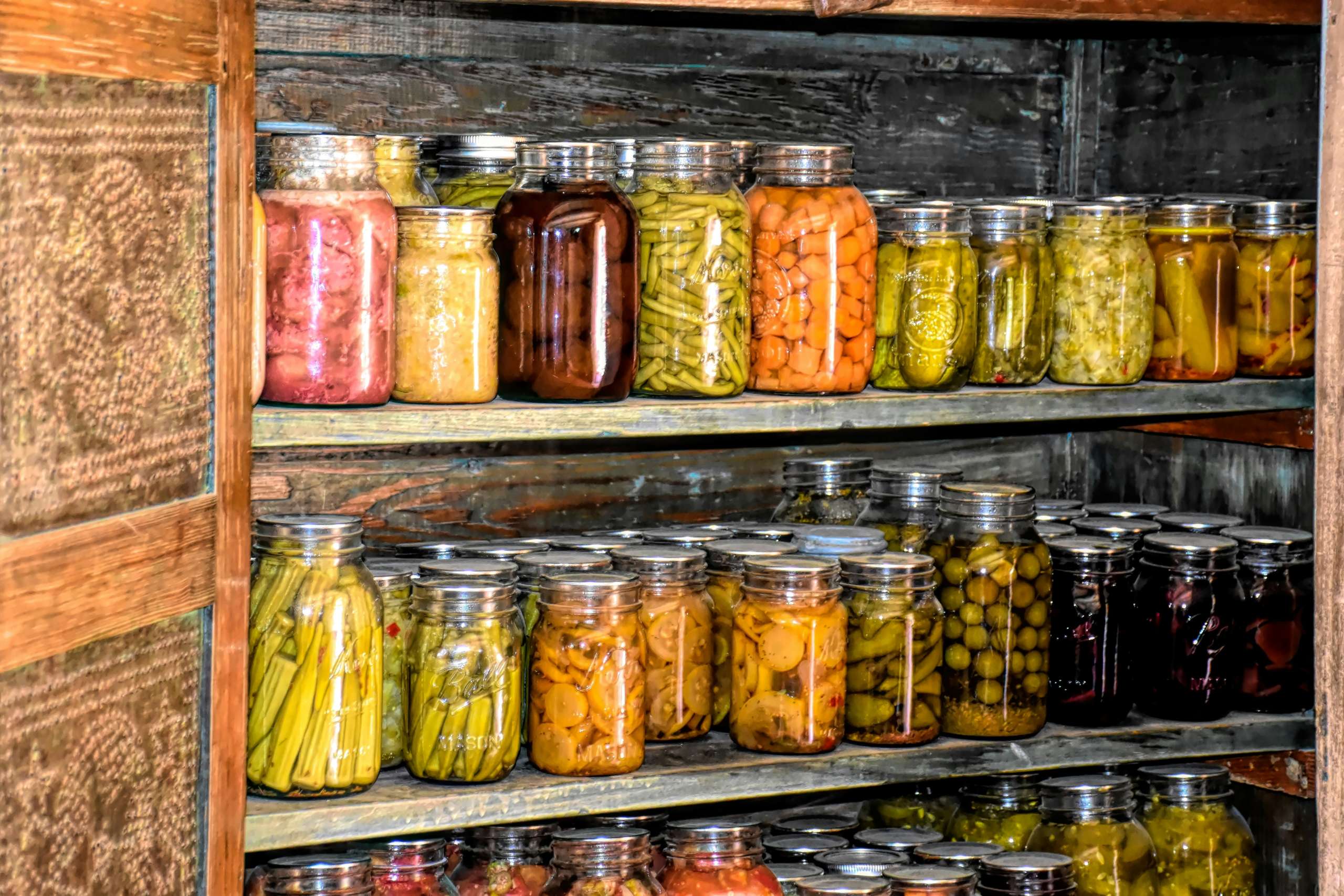
Once cooled, your preserves will last months or a year if stored in a cool dark cupboard.
Mine are spiced apple chutney and pickled carrots.
If you want to start growing your own fruits and vegetables for preserving, here are some tips for growing your own produce in the UK climate.
Fermentation The Magic Of Good Bacteria
If canning is about control, fermentation is about trust. You’re inviting the good bacteria to
do their thing—transforming cabbage into sauerkraut, and cucumbers into pickles. It might
sound intimidating, but it’s incredibly forgiving.
No preservative or heat fermentation is required. Only water, salt, and time.
How it works:
Salt draws out the water from the vegetables and forms a brine, and this prefers
lactobacillus (good bacteria) to multiply.
The lactic acid is formed by naturally pickling the food with bacteria.
Easy process:
Chop veg (cabbage, carrots, beetroot are all good).
Add salt. Roughly 1-2 tablespoons to a liter water, or rub salt straight on to the veg (dry
brining).
Jar and cover with brine so all is under.
Loosely seal and leave at room temperature 3-7 days. You’ll see bubbles—that’s magic.
Check daily. When tangy-sky good, chill.
The end result is crunchy, healthy, spicy food packed with belly-friendly probiotics—just
what the winter immune system requires.
Kid-Friendly How-To’s
We’re still young enough that we do it for enjoyment and not for attendance. They like:
Scrubs and washing carrots (“Look, Dad, it’s a sword!”)
Filling jars with vegetables and “secrets” such as cloves
Making labels on the jars and helping date everything
It becomes complicated, I believe, but also teaches them where food originates and good
things come to those who wait—a lesson far from learned so easily during the era of
instant everything.
Conclusion
Fermenting and preserving aren’t pinching pennies (though that is a nice side effect). They
root you in the seasons, reduce waste, and bring food into your home that is actually better
for you to be consuming. Between the school pickups and work, a preserving afternoon is
an invitation to take it easy, get your hands dirty, and make something that will end up
lasting. If you can grab some of it this fall, do it. Because by cold, dark winter, a full pantry
of homemade treasures, in warm jars, is a patch of sunshine that you’ve created.