Owning a vacation home in Portugal or Bulgaria is an incredible privilege, offering a personal sanctuary under the European sun. However, one of the most common headaches for British second-home owners is garden maintenance. Unlike in the UK, where rain is abundant, summers in Portugal (especially the Algarve and Alentejo) and Bulgaria (along the Black Sea coast and inland plains) are marked by intense heat and prolonged dry spells.
If you only visit your property a few times a year, maintaining a lush green lawn or delicate flowerbeds is practically impossible without hiring expensive full-time gardeners. Fortunately, you can still have a stunning, vibrant garden by embracing drought-resistant landscaping (also known as xeriscaping).
By choosing the right native plants, improving your soil, and setting up automated smart systems, you can create a beautiful garden that thrives entirely on its own while you are back in the UK.
1. The Xeriscaping Concept: Design for Neglect
Xeriscaping is the practice of designing landscapes to minimize or eliminate the need for supplemental watering. For a holiday home, this means designing a garden that looks lush but actually thrives on “neglect.”
- Zoning: Group plants with similar water needs together. Keep any plants that require occasional watering close to the house where they are easy to access.
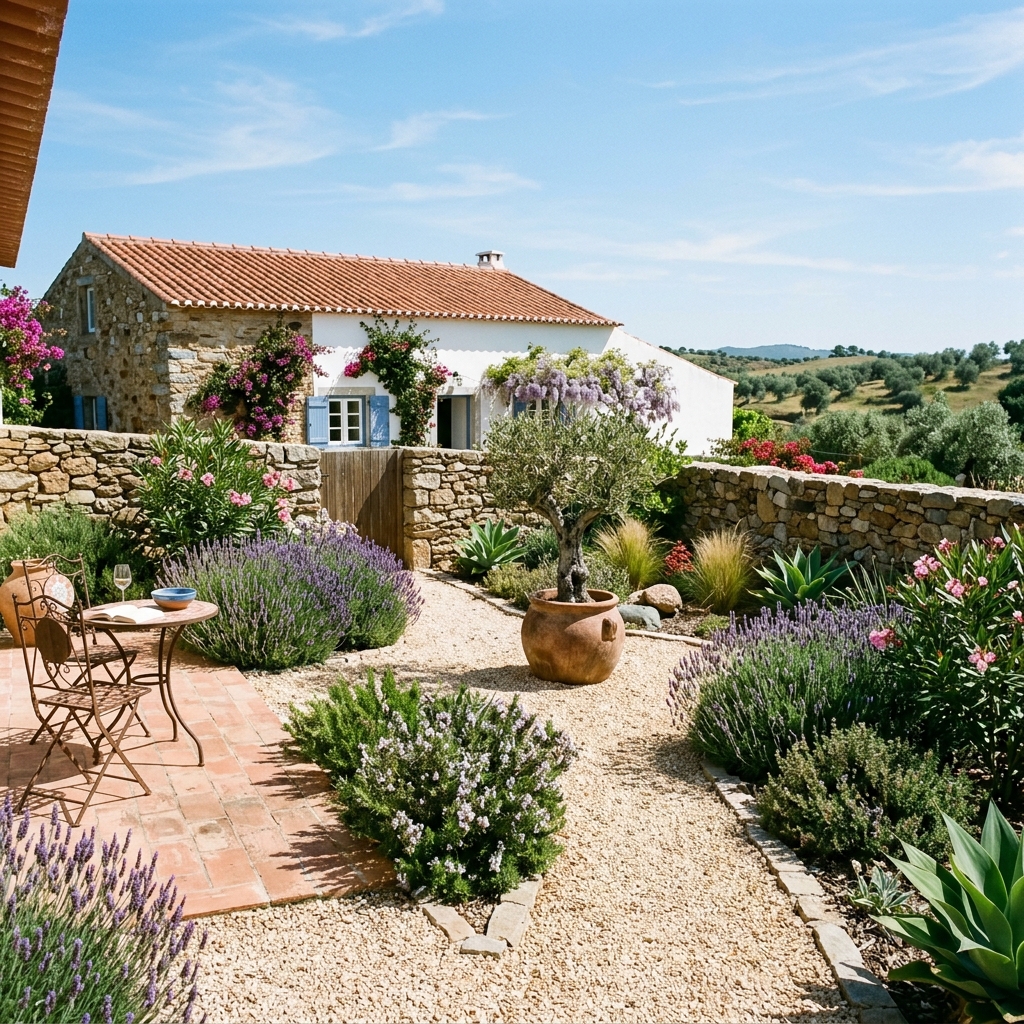
- Reduce lawns: Standard grass lawns are water-guzzlers. Replace large grassy areas with attractive gravel pathways, local stone paving, or hardy groundcovers that require no mowing.
2. Choosing the Best Drought-Resistant Plants
Native plants are already adapted to local soil types and climate extremes, making them your garden’s best defense against summer heatwaves.
Mediterranean Stars for Portugal:
- Lavender (Lavandula): A fragrant classic that loves sandy, well-draining soil and full sun.
- Rosemary (Salvia rosmarinus): Incredibly hardy, drought-tolerant, and doubles as a fresh kitchen herb.
- Oleander (Nerium oleander): Offers spectacular pink, white, or red blooms all summer with virtually zero water.
- Olive Trees (Olea europaea): The ultimate symbol of Mediterranean resilience, perfect as a central feature.
Balkan Survivors for Bulgaria:
- Perennial Sage (Salvia): Highly drought-tolerant with deep purple blooms that attract local pollinators.
- Stonecrop (Sedum): Succulents that store water in their fleshy leaves, perfect for rock gardens.
- Juniper (Juniperus): Evergreen shrubs that survive both dry summers and freezing Bulgarian winters.
- Thyme (Thymus): A creeping groundcover that forms a beautiful, drought-resistant green carpet.
3. Soil Prep, Mulching, and Rockscaping
How you prepare your ground determines how well your plants survive without you.
The Power of Mulch
Mulching is the single most important task in a low-water garden. A 5-7cm layer of organic mulch (like pine bark) or inorganic mulch (like local gravel) prevents up to 70% of soil moisture from evaporating. It also keeps the roots cool and stops weeds from taking over while you are away.
Rockscaping (Alpinums)
Creating a rock garden (often called an *alpinum* in Bulgaria) is a brilliant way to add visual texture. Arrange local boulders and gravel, planting hardy succulents and ornamental grasses between the stones. It creates a modern, low-maintenance design that looks clean and structured year-round.
4. Smart Irrigation: Set It and Forget It
Even drought-resistant plants need help getting established during their first year. An automated smart watering system is a worthwhile investment.
Drip Irrigation with Solar Timers
- Drip systems apply water directly to the root zone, minimizing evaporation loss compared to overhead sprinklers.
- Smart timers: Install a battery- or solar-powered water timer connected to your outdoor tap. Many modern systems connect to Wi-Fi, allowing you to monitor or adjust the watering schedule from your smartphone in the UK.
Low-Maintenance Plant Comparison
| Plant Name | Water Need | Sun Need | Winter Hardiness | Visual Role |
|---|---|---|---|---|
| Rosemary | Extremely Low | Full Sun | High | Border Shrub & Herb |
| Oleander | Very Low | Full Sun | Medium | Privacy Screen & Flowers |
| Sedum / Stonecrop | Extremely Low | Full Sun | Extremely High | Rock Garden Groundcover |
| Olive Tree | Low | Full Sun | High | Focus Point Tree |
| Lavender | Extremely Low | Full Sun | High | Fragrant Paths & Color |
Conclusion
Creating a drought-resistant garden for your holiday home in Portugal or Bulgaria allows you to enjoy your holidays instead of spending them weeding and watering. By replacing lawns with gravel and stone, planting robust native species like lavender and sedums, and using thick mulch with a simple automated drip system, your property will remain beautiful, green, and healthy all summer long—without a drop of stress.
Frequently Asked Questions (FAQ)
What plants survive best without watering in Portugal and Bulgaria?
In Portugal, Mediterranean plants like rosemary, lavender, oleander, bougainvillea, and olive trees survive best. In Bulgaria, hardy perennials like thyme, perennial sage, juniper, and various sedums handle the summer droughts and cold winters best.
Is drip irrigation expensive to install in a holiday home?
No, basic drip irrigation kits are highly affordable and easy to install as a DIY project. Adding a programmable tap timer costs very little and ensures your garden receives precise, scheduled watering.
How does mulch help reduce water usage in hot climates?
Mulch acts as a protective barrier on top of the soil. It blocks direct sunlight from heating the earth, keeping roots cool and dramatically reducing the rate of water evaporation from the soil.
Can I use gravel instead of grass for a holiday home garden?
Yes, using decorative gravel, river stones, or local slate is a popular landscaping trend in hot countries. It eliminates the need for watering, fertilizing, and mowing, while giving the property a clean, modern aesthetic.
How do I protect my holiday garden during a winter freeze in Bulgaria?
Bulgarian winters can be harsh. Choose plants that are both drought-tolerant and frost-hardy (such as lavender, juniper, and thyme). Mulching before winter also helps insulate plant roots from deep frost.