Summer heatwaves are becoming increasingly common and intense. While those living in spacious houses with shaded gardens have natural retreats, flat dwellers often face a much tougher challenge. Modern flats—especially in urban centers across the UK—are designed to retain heat to meet strict winter energy efficiency standards. However, during a scorching summer heatwave, this high insulation turns apartments into virtual greenhouses.
Without the luxury of built-in air conditioning, temperatures indoors can quickly soar to uncomfortable and even dangerous levels. Fortunately, you do not need an expensive AC system to survive the summer. By understanding a few simple principles of thermodynamics, shading, and active ventilation, you can dramatically lower the temperature of your apartment.
Here is a comprehensive guide to the cleverest, budget-friendly ways to cool down your flat this summer.
1. The Physics of Flat Heat: Why Apartments Get So Warm
To cool a flat effectively, it helps to understand why it gets so hot in the first place. Flats present unique structural challenges:
- High thermal mass: Concrete, brick, and steel absorb solar radiation during the day and slowly radiate that heat back into your living space throughout the night.
- Single-aspect ventilation: Many flats only have windows on one side, making it incredibly difficult to create a natural through-breeze.
- Rising heat: If you live on a middle or top floor, you also inherit the heat rising from the apartments below you.
By focusing on blocking external heat during the day and actively expelling stored heat at night, you can break this cycle.
2. Master Daytime Shading: Block Heat Before It Enters
The single most effective action you can take is to stop solar energy from passing through your window glass. Once sunlight enters your flat, it hits floors and furniture, converting into heat that gets trapped inside.
Keep Windows Closed and Shaded
It is a common mistake to open windows wide during the hottest part of the day. If the outdoor temperature is 30°C and your indoor temperature is 24°C, opening the window simply invites the hotter air inside.
- Close windows as soon as the outdoor temperature matches or exceeds your indoor temperature.
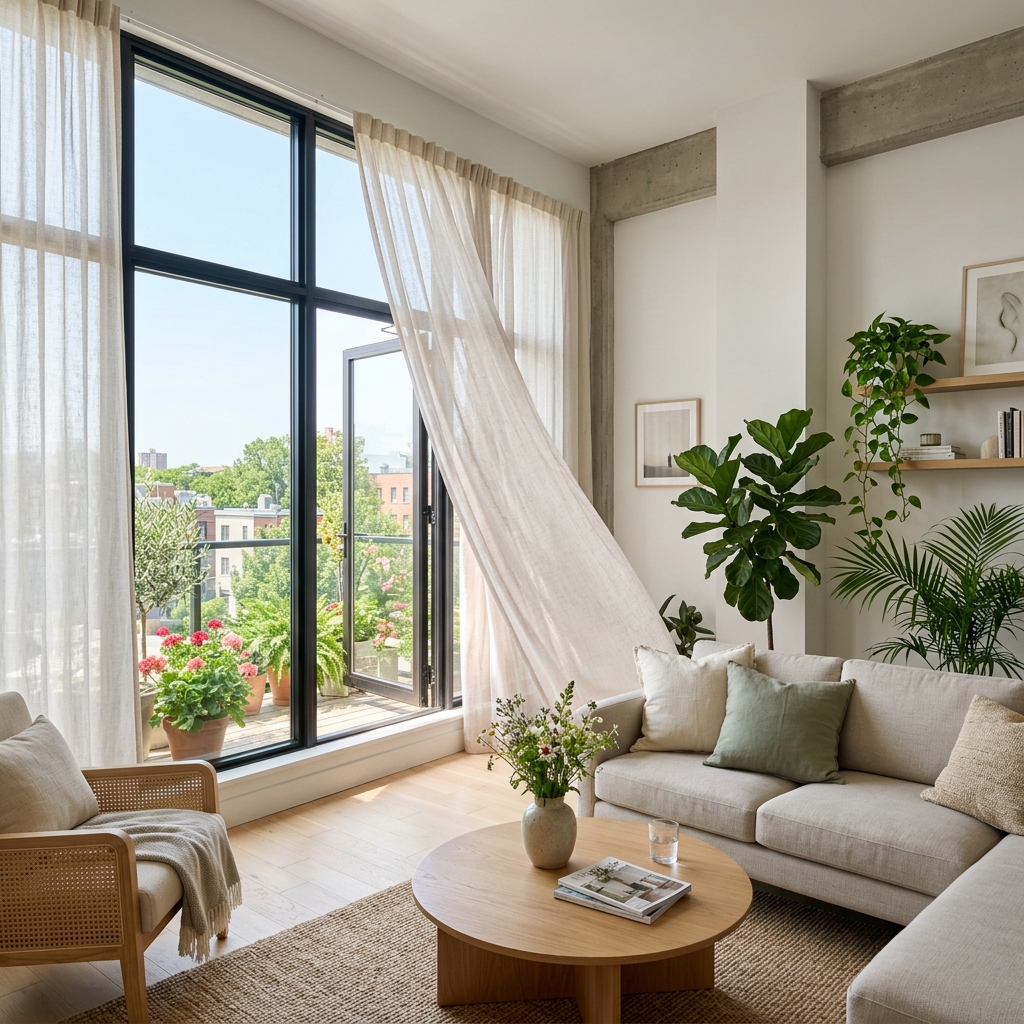
- Close blinds and curtains completely. Light-coloured, reflective thermal curtains are highly effective at bouncing sunlight away.
- Use window film: Applying temporary, static-cling reflective window film to south- or west-facing windows can block up to 70% of incoming solar heat without blocking your view.
3. Active Ventilation: The Art of Fan Placement
Simple desk fans do not cool the air; they only cool your skin by accelerating sweat evaporation. To lower the actual room temperature, you must use fans to move hot air out and pull cool air in.
The Dual-Fan Exhaust System
If your flat has windows on opposite sides, or even if you have windows in different rooms, you can create a highly efficient wind tunnel:
- The Exhaust Fan: Place a fan facing *outward* in a window on the shaded side of the flat (or where the air naturally flows out). This pushes the hot, stagnant indoor air out.
- The Intake Fan: Place another fan in a window on the opposite side, facing *inward*. This pulls the cooler outdoor air in.
- Night-time Flushing: Start this system only in the late evening or early morning when the outdoor air temperature drops below your indoor temperature. Run it overnight to completely flush the hot thermal energy from your walls and furniture.
4. Eliminate Internal Heat Sources
Your flat has multiple hidden “heaters” running constantly. Minimizing these internal heat loads can make a noticeable difference in a small space.
Avoid Cooking and High-Draw Appliances
- Skip the oven: Ovens act as massive space heaters. Focus on no-cook meals, salads, or utilize outdoor barbecues and microwave ovens.
- Unplug electronics: Televisions, desktop computers, chargers, and game consoles generate ambient heat even when in standby mode. Turn them off at the wall plug.
- Switch to LED bulbs: Traditional incandescent bulbs convert up to 90% of their energy into heat. Switch to energy-efficient LEDs, which remain cool to the touch.
5. Body Cooling Hacks: Lower Your Core Temperature
When cooling the physical flat is not enough, prioritize cooling yourself.
The Pulse Point Trick
Running cold water over your wrists, ankles, or the back of your neck for 30 seconds activates key pulse points, immediately sending a cooling sensation through your entire circulatory system.
Create a DIY Evaporative Cooler (The Ice Fan)
Place a large bowl filled with ice or frozen water bottles directly in front of a fan. As the air blows over the ice, it carries the cold water vapor with it, creating a refreshing, cool mist.
Cooling Methods: Effectiveness vs. Cost Comparison
| Cooling Method | Cooling Impact | Setup Cost | Running Cost | Best Time to Use |
|---|---|---|---|---|
| Reflective Window Film | High | Low | Zero | Daytime (All Day) |
| Closed Blinds & Curtains | Medium-High | Zero | Zero | Daytime (Direct Sun) |
| Dual-Fan Wind Tunnel | High | Low | Very Low | Night-time & Early Morning |
| DIY Ice Fan | Medium | Very Low | Minimal (Freezer) | When sitting close to fan |
| No-Cook Meal Prep | Medium | Zero | Zero | Afternoon & Evening |
Conclusion
Cooling down a flat without air conditioning requires a tactical approach. By aggressively blocking daytime sunlight, shutting out hot air, and utilizing smart fan dynamics at night to flush out stored heat, you can keep your apartment comfortable even during intense UK summer heatwaves. Combined with minor lifestyle adjustments like cold water compression and smart appliance use, you can successfully beat the heat without breaking the bank or your electricity budget.
Frequently Asked Questions (FAQ)
Does putting ice in front of a fan actually work?
Yes, it does. This is a basic form of evaporative cooling. As the ice melts, the fan blows air over the cold surface, carrying chilled water vapor into the room. It is most effective when you are sitting directly in the path of the airflow.
Should windows be open or closed during a hot day?
During the hottest parts of the day, windows should remain closed. Keep them closed as long as the outdoor temperature is higher than the indoor temperature. Open them only in the evening or early morning when the outside air is cooler.
How do you cool down a south-facing flat?
South-facing flats receive the most direct sunlight. The key is reflection: install light-coloured blinds, draw heavy thermal curtains, or apply reflective window films to bounce the solar radiation away before it penetrates the glass.
Is it cheaper to run a fan all day or turn it off when leaving?
Fans do not cool rooms; they cool people. Running a fan in an empty room is a waste of electricity. Always turn off fans when you leave the room to save energy and lower your bills.
What type of bedding is best for hot summer nights?
Choose 100% natural, breathable fibres. Organic cotton, linen, or bamboo sheets are highly breathable and moisture-wicking, helping your body regulate temperature much better than synthetic polyester sheets.