For many British holidaymakers, a trip to southern Spain conjures up images of crowded high-rise resorts, jam-packed beaches, English breakfast boards, and noisy promenades. The Costa del Sol and Costa Blanca have long dominated the UK tourism market, offering sun-soaked convenience but often at the cost of authentic Spanish culture. However, if you venture just a little further east along the Andalusian coastline, past the vast plains of Almería, you will discover a completely different world: Cabo de Gata-Níjar Natural Park, Spain’s best-kept coastal secret and one of the last remaining stretches of undeveloped wilderness on the Mediterranean Sea.
| Cabo de Gata Quick Travel Blueprint for UK Sun-Seekers | |
|---|---|
| Nearest Airports | Almería (LEI) — 30 mins; Málaga (AGP) — 2.5 hrs; Alicante (ALC) — 2.5 hrs |
| Sunshine & Climate | Over 3,000 sunshine hours per year; warmest winter sea temps in mainland Spain |
| Best Travel Window | April to June & September to November (warm seas, crowd-free beaches) |
| Car Hire Necessity | 100% Essential (unpaved tracks lead to the best coves) |
| Top Base Towns | San José (convenient hub), Las Negras (bohemian vibe), Agua Amarga (boutique chic) |
| Pair With | The mountainous white villages of Ronda and Grazalema or our Top Winter Sun Escapes |
A Landscape Forged in Fire: The Geology and Desert Climate
Spanning over 38,000 hectares of terrestrial park and 12,000 hectares of marine reserve, Cabo de Gata-Níjar is Andalusia’s largest protected coastal area. It is a land of fascinating geographical extremes: Europe’s only true hot desert climate, blessed with less than 200 mm of annual rainfall. Even in the depths of December and January, daytime temperatures hover pleasantly around 18°C–21°C under brilliant cobalt skies.
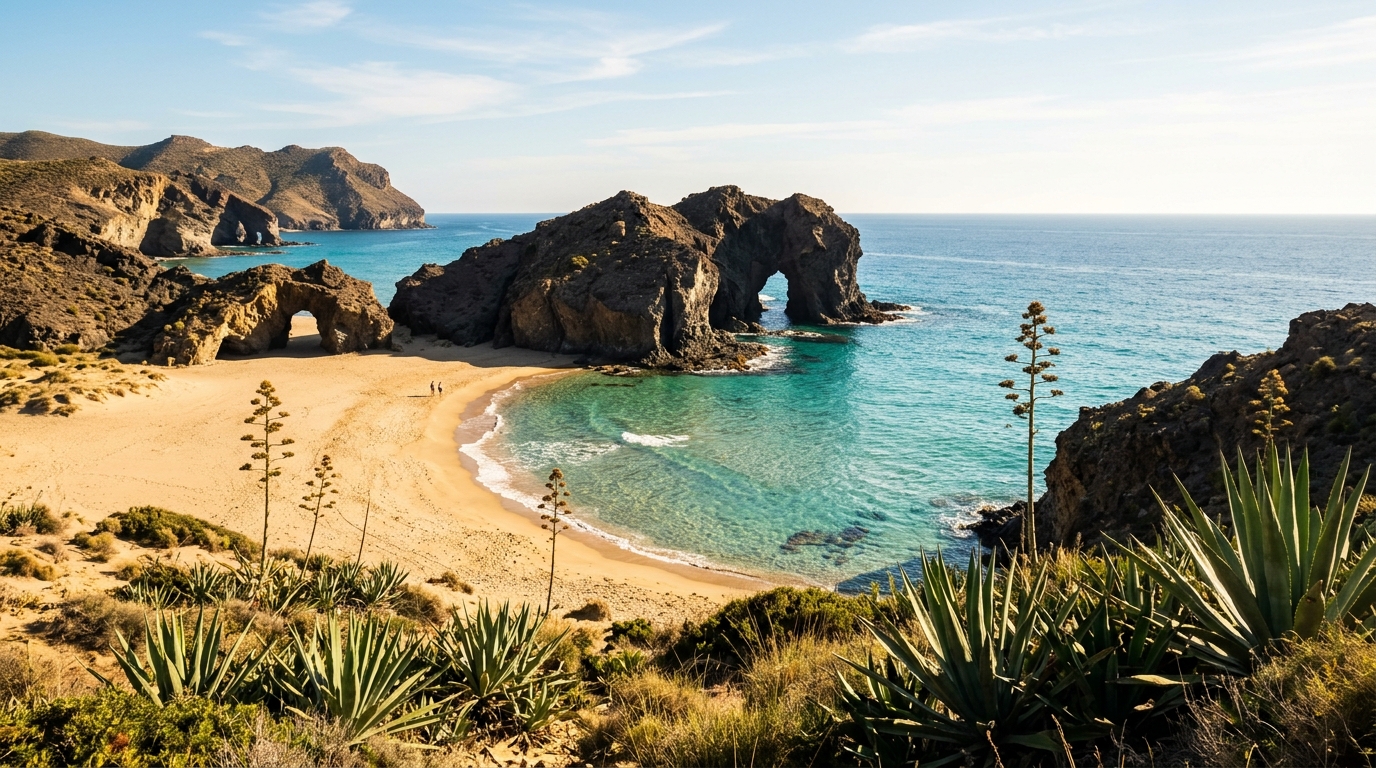
Millions of years ago, violent submarine volcanic eruptions shaped the sharp basalt headlands, fossilized dune systems, and sunken caldera basins that define the shoreline today. In 1997, the entire park was awarded UNESCO Biosphere Reserve status, legally protecting its fragile dunes, wild agaves, and marine posidonia meadows from high-density hotel development forever.
Getting There from the UK: Flight Routes and Driving Essentials
Travelling to Cabo de Gata from the UK is remarkably straightforward if planned smartly:
- Direct Flights to Almería (LEI): Airlines such as easyJet, Jet2, and Ryanair operate seasonal direct flights from London Gatwick, Manchester, Birmingham, and Bristol directly into Almería Airport. From the terminal, the western boundary of the natural park is less than a 30-minute drive.
- Year-Round Gateways (Málaga & Alicante): If travelling during the off-season or winter months, fly directly into Málaga Airport (AGP) or Alicante Airport (ALC). Both feature high-frequency daily flights from almost every major UK regional airport. From Málaga, the drive along the newly completed A-7 coastal autovía takes approximately 2 hours and 20 minutes through spectacular Mediterranean scenery.
- Renting a Car: Public transport inside the natural park is negligible. The most jaw-dropping beaches (such as Playa de Mónsul and Cala de Enmedio) are situated at the terminus of unpaved dirt tracks. Opt for a car with decent clearance and full zero-excess gravel insurance.
The Ultimate Beach Guide: Untamed Coves and Crystal Waters
Because Cabo de Gata is an environmentally protected sanctuary, you will find no commercial beach bars, rental loungers, or water sports hire on its wild beaches. You must carry sufficient drinking water, high-factor sunscreen, and snacks. Here are the five unmissable coastal spots:
- Playa de los Genoveses: A sweeping, pristine bay bordered by towering eucalyptus trees, wild prickly pear cacti, and sweeping sand dunes. The seabed slopes gently into calm, turquoise water, making it a dream for wild swimming and paddleboarding.
- Playa de Mónsul: World-famous for its massive, wave-shaped volcanic crest (La Peineta) protruding from the dark golden sand. Film buffs will instantly recognise this beach from classic blockbusters like Indiana Jones and the Last Crusade and Lawrence of Arabia. The offshore reef shelves provide some of the clearest snorkelling in mainland Europe.
- Cala de Enmedio: Accessible via a 30-minute coastal hike from the whitewashed hamlet of Agua Amarga. The striking contrast between brilliant chalk-white fossilized dunes, golden sands, and luminous turquoise water feels more like the Greek Cyclades than mainland Spain.
- Playa de los Muertos: Consistently ranked among Spain’s top three beaches. It features a sweeping mile of tiny white volcanic pebbles and exceptionally clear, deep-blue water. The 15-minute downhill path from the cliffside car park is steep, so wear trainers rather than flip-flops.
- Cala de San Pedro: A legendary bohemian cove accessible only via a 4 km cliff trail from Las Negras or by local water taxi. Set within the crumbling stone ruins of a 16th-century fortress, it features natural freshwater springs, palm groves, and a peaceful off-grid community.
Authentic Coastal Villages: Where to Stay & Dine
The settlements within the park are strictly preserved low-rise fishing hamlets:
- San José: The practical hub of the park. It offers a charming marina, bike rental shops, local grocery stores, and an eclectic range of seafront seafood restaurants serving freshly caught red prawns (Gambas de Garrucha) and grilled cuttlefish (Jibia).
- Las Negras: A laid-back, bohemian enclave with a vibrant evening vibe. You’ll find acoustic live music, beachfront tapas bars, and artisan stalls in the plaza.
- Agua Amarga: A sophisticated, chic village at the northern tip of the park. With upscale boutique fincas and tranquil beachfront dining, it is ideal for couples seeking peaceful luxury.
Frequently Asked Questions (FAQ)
Is Cabo de Gata suitable for families with young children?
Yes, particularly Playa de los Genoveses and the main town beach in San José, both of which offer sheltered bays, very shallow water entry, and fine sand. However, for remote coves like Playa de los Muertos, steep trails and sudden deep drops in the water make them better suited to confident swimmers and adults.
What is the tapas tradition in Almería?
Unlike Madrid or Barcelona where tapas must be paid for separately, Almería is famous for its generous traditional tapas culture. Whenever you order a drink (beer, wine, or soft drink), you receive a generous complimentary tapa of your choice from the kitchen menu!
Looking to explore more of Andalusia’s hidden treasures? Don’t miss our comprehensive sister guide to Ronda and Grazalema: Inland Mountain Escape for the ultimate two-centre Spanish holiday!